Movement in later life is often sold as a punishment for sitting. It works better as a way to keep the pleasures that matter: standing to cook, walking to a friend’s chair, getting out of bed without a strategy meeting. Joy is not the opposite of therapy. It is the reason anyone repeats it.
Little and often
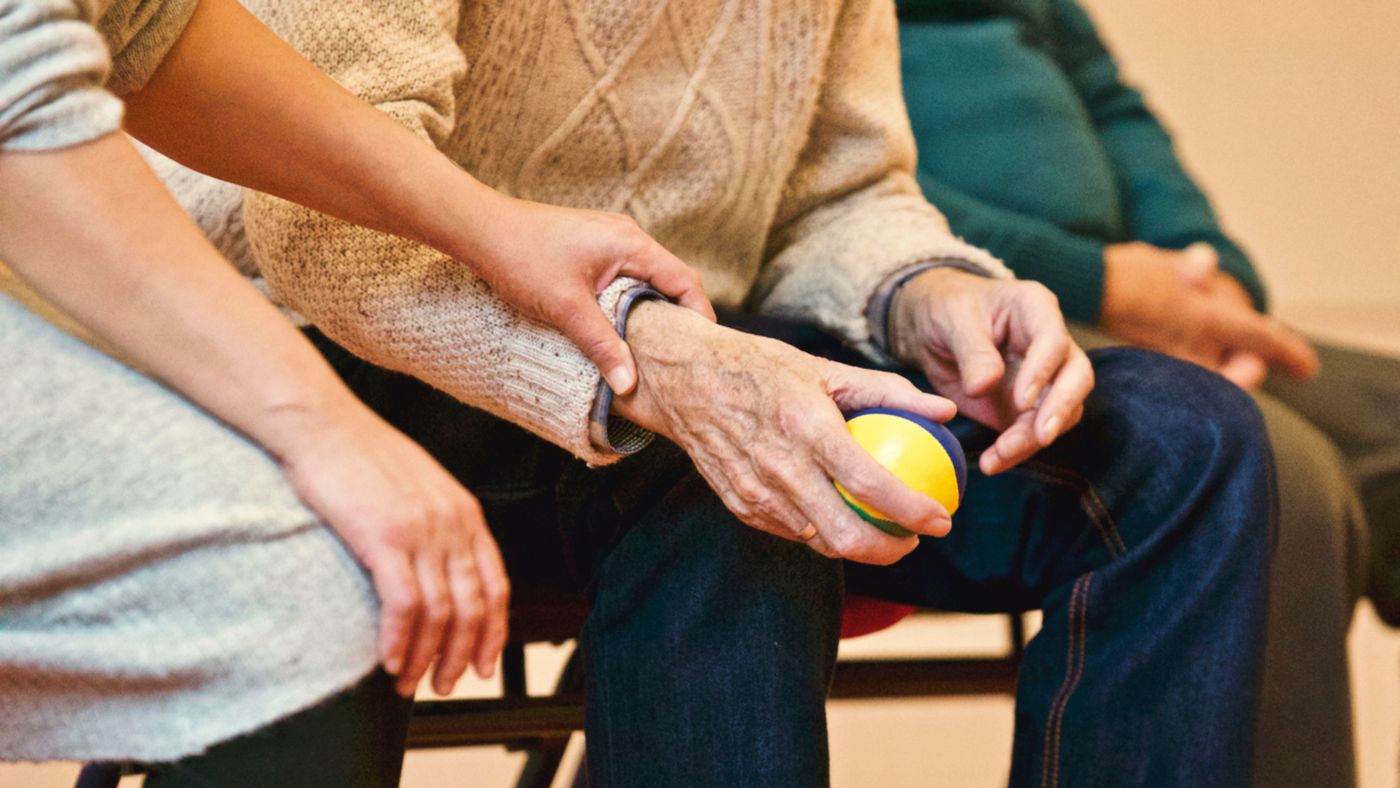
Ten honest minutes most days beat a heroic hour that causes two days of pain. Marching while seated, squeezing a soft ball, rolling the ankles, and practicing sit-to-stand are legitimate exercise. Hold a counter, not a person, when standing work begins. If breathlessness, chest pain, or dizziness appears, stop and tell a clinician. Those symptoms are not something to push through.
Make the room a partner
A firm chair with arms, a clear floor, and shoes that stay on the foot will do more than an expensive mat that lives in a cupboard. Outdoors, a short walk with a companion counts. Our accompanied outings exist so people can see daylight without negotiating every curb alone.
Measure what the person values
Dr. Andre Cole asks clients what they want to do again, not only how many repetitions they completed. “I buttered the toast standing up” is a clinical outcome. Write those wins down. They encourage the person more than a chart of numbers, and they tell the family that the plan is attached to a life, not a quota.
On stiff days, do the easiest version. Stopping completely for a week is how confidence leaks away. A smaller session still tells the body it is invited to move.